Over the past 10+ years working on residential cleanouts throughout Beaver County and surrounding areas, we’ve tracked one thing very closely:
👉 How much material actually comes out of a house—by volume and by weight.
Most homeowners ask:
👉 “How many dumpsters will I need?”
But the more accurate question is:
👉 “How many cubic yards—and how many tons—are we dealing with?”
Because when it comes to cleanouts, both matter.
🟢 Understanding the Basics: Cubic Yards vs Weight
Before getting into real examples, here’s what you need to know:
- Dumpster size is measured in cubic yards (volume)
- Disposal cost is often based on weight (tons)
👉 You don’t just fill space—you hit weight limits too.
🟢 Standard Dumpster Reference
- 10-yard dumpster = small cleanout
- 20-yard dumpster = partial home
- 30-yard dumpster = full home
- 40-yard dumpster = large/heavy cleanout
But in real-world jobs, we rarely stop at one.
🟢 Material Breakdown (Volume + Weight by Category)
Based on field experience, here’s how common household contents break down:
🛋 Furniture
- Couch:
~2–3 cubic yards
~150–300 lbs - Mattress (queen/king):
~1–1.5 cubic yards
~80–150 lbs - Dresser / large furniture:
~1–2 cubic yards
~100–250 lbs
👉 Key Insight: Furniture fills dumpsters quickly but doesn’t always max out weight.
📦 Household Contents (Boxes, Clothing, Paper)
- Standard packed box:
~0.5 cubic yards
~30–50 lbs - Full room contents:
~5–15 cubic yards
~500–1,500+ lbs
👉 These items are the biggest contributor to total cubic yardage.
🧰 Basements & Garages
- Typical basement cleanout:
~10–30 cubic yards
~1,000–4,000+ lbs - Garage (tools, shelving, scrap):
~5–20 cubic yards
~500–2,000+ lbs
👉 These areas often combine both high volume AND high weight.
💧 Wet / Damaged Materials
This is where cleanouts shift into heavy-duty work.
- Wet drywall:
~1 cubic yard = 500–1,000 lbs - Carpet (per room):
~2–4 cubic yards
~200–400 lbs (dry)
👉 more when saturated - Mixed wet debris:
extremely dense, fills dumpsters fast
👉 Moisture can double or triple total weight per yard.
❄ Appliances (Freezers, Refrigerators)
- Chest freezer (empty):
~2–3 cubic yards
~150–300 lbs - Upright freezer:
~2–4 cubic yards
~200–350 lbs - Freezer with contents (common in vacant homes):
~2–4 cubic yards
👉 300–800+ lbs total weight
👉 These are often low volume, high weight problem items.
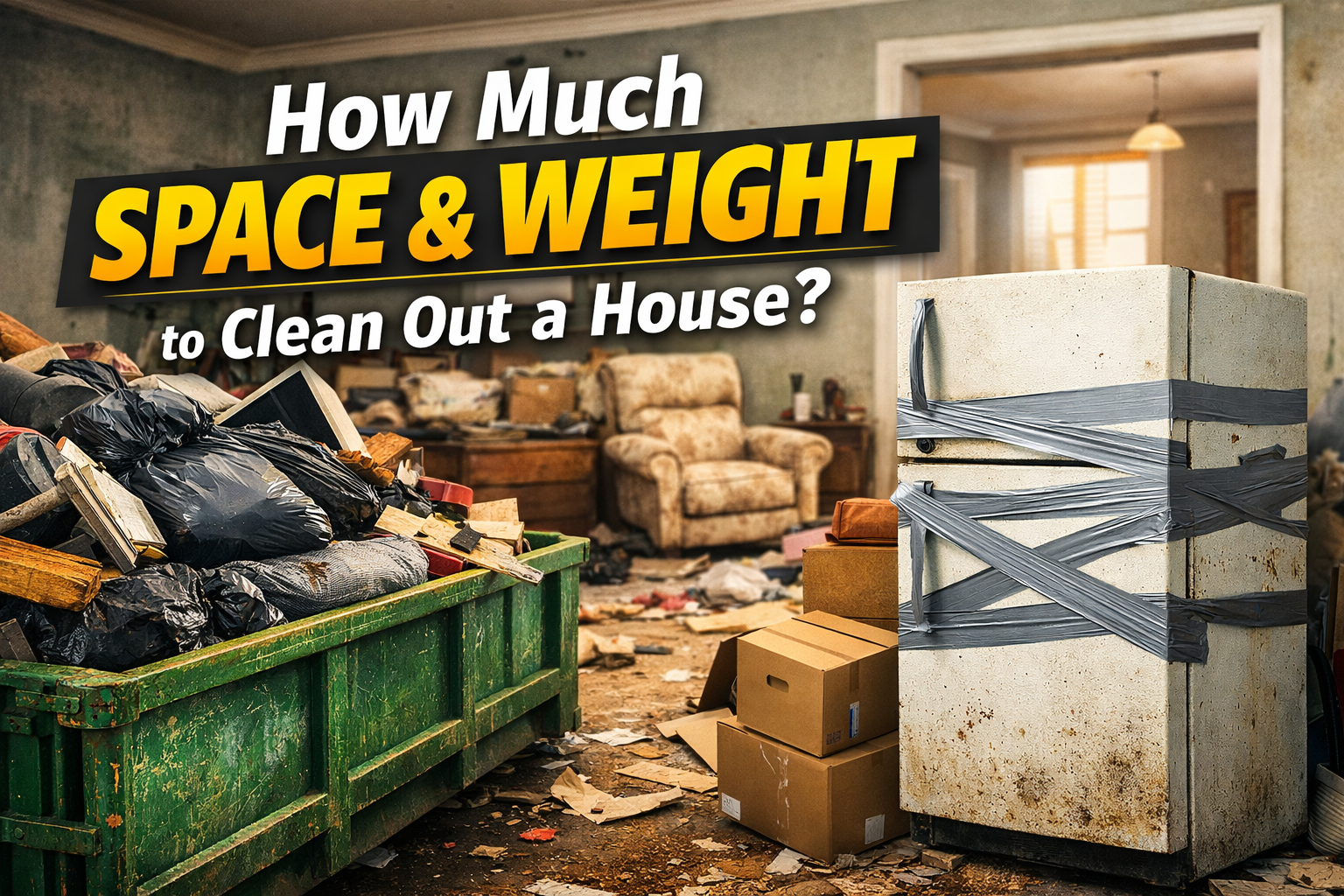
Freezer & Fridge Safety TIP: The first thing I do when I see a freezer or refrigerator is to duct tape them shut. This ensures nobody will open the door. If you do the stink will be overpowering. Best of luck if you have appliances without power!
🧱 Mixed Debris (Combined Materials)
When everything is mixed together:
- 1 cubic yard (typical mixed debris):
~300–800 lbs
👉 That means:
- 10 yards = 3,000–8,000 lbs (1.5–4 tons)
- 40 yards = 12,000–32,000 lbs (6–16 tons)
🟢 Real-World Cleanout Totals (10+ Years of Data)
Here’s what we consistently see across actual projects:
Light Cleanout
- Volume: 10–20 cubic yards
- Weight: 2–6 tons
Average Home Cleanout
- Volume: 30–60 cubic yards
- Weight: 5–15 tons
Heavy Accumulation / Long-Term Occupancy
- Volume: 60–100+ cubic yards
- Weight: 10–25+ tons
Extreme Cleanouts (Damage, Bio Conditions, Full Contents)
- Volume: 100–120+ cubic yards
- Weight: 20–40+ tons
👉 These are real numbers from actual jobs—not estimates.
🟢 Case Reference (Large-Scale Cleanout)
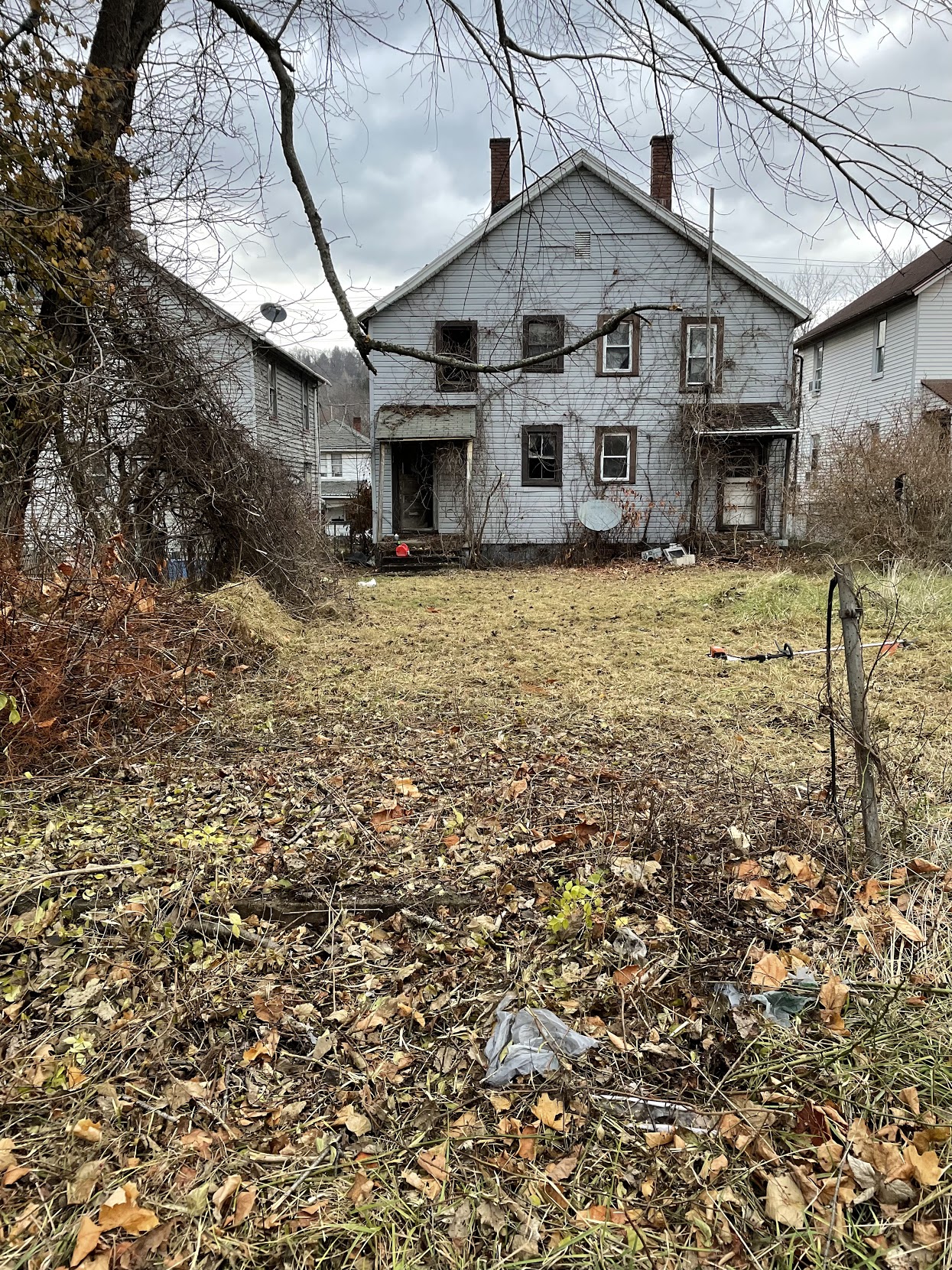
On a recent project involving:
- Full household contents
- Wet and deteriorated materials
- Multiple appliances including freezers
- Conditions requiring careful handling
The total removal came out to:
👉 100+ cubic yards of material
👉 Spread across multiple dumpsters
👉 With significant weight due to moisture and density
🟢 What This Means for Homeowners
When you look at a house and think:
👉 “It’s just stuff”
The reality is:
👉 You’re often dealing with 10–40+ tons of material
That translates to:
- Multiple dumpsters
- Multiple days (or weeks) of work
- Significant labor and cost
🟢 Should You Clean It Out Before Selling?
Based on real-world experience:
👉 Not always.
For many homeowners:
- The cost doesn’t justify the return
- The time commitment is too high
- The physical and emotional toll is significant
🟢 Your Options
You typically have three choices:
- Clean everything out and list the property
- Partially clean and improve presentation
- Sell the property as-is, including contents
🟢 How We Help
At Geiser Home Buyers, we use real numbers—volume, weight, and labor—to help homeowners make informed decisions.
Some choose to clean out and maximize value.
Others choose to sell as-is and avoid the process entirely.
👉 The goal is to choose the path that makes the most sense for your situation.
🟢 Call to Action
If you’re trying to figure out:
👉 how much work a cleanout will take
👉 how many dumpsters you’ll need
👉 or whether it’s even worth doing
We can help you break it down.
📞 Call or text: 412-401-5883
🌐 Visit: GeiserHomeBuyers.com
No pressure—just real numbers and real options.